In a market where flexibility and speed matter, the Best Work-From-Home Opportunities reward applicants who prepare a credible setup, target roles that fit their strengths, and submit tailored applications fast.
Remote and hybrid have stabilized as durable models, and employers continue hiring across technology, finance, customer success, and operations.
Research teams now show remote work accounts for roughly a quarter of paid workdays in the United States, with levels steady since 2023.
What Remote Work Means Today
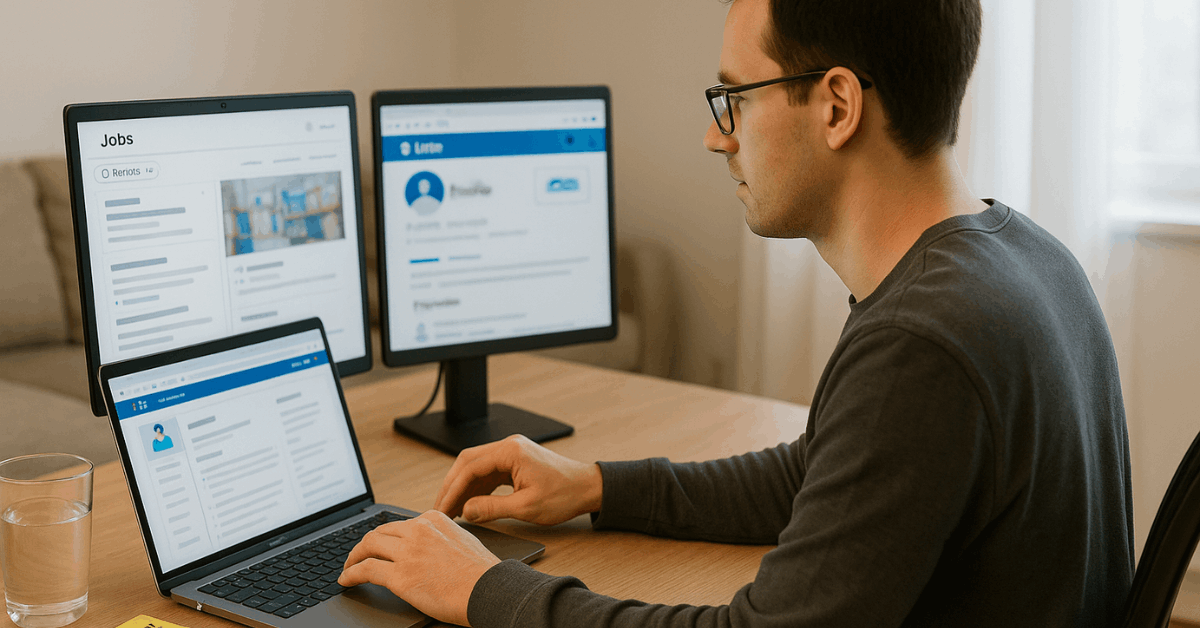
Remote work describes performing job duties away from a company office using secure networks, collaboration apps, and documented workflows.
Evidence across advanced economies indicates that hybrid and remote work have settled into a long-term equilibrium rather than a passing phase.
Analysts place average remote time near one day per week globally and about a quarter of paid workdays in the United States, with notable variation across industries and countries.
Benefits Remain Tangible for Both Sides
A landmark randomized study found a 13 percent performance boost in a call center, driven by longer on-task time and quieter environments.
Employers and employees report meaningful cost savings, including employee savings of nearly $6,000 per year and employer savings of around $11,000 per part-time remote worker.
Prepare Your Setup and Routine
Aim for consistent lighting, a comfortable chair, an external keyboard or mouse, and clutter control that speeds retrieval. Strong, stable internet matters; a wired connection often beats Wi-Fi for video calls.
Organizations commonly require VPN access and multifactor authentication; national agencies recommend standards-based VPNs, hardened endpoints, and updated clients to reduce attack surface. Align your device policies with NIST and CISA guidance.
Start with a short planning block, work in focused intervals, and finish with a shutdown ritual that clears the desk and closes work apps. Simple wardrobe upgrades support mindset, especially on camera.
Choose Your Path: Employee or Freelance
Selecting the right model affects how income arrives, which benefits apply, and who supplies equipment. Scan the contrasts, then match to risk tolerance and current demand.
| Factor | Traditional Employment | Self-Employment |
| Schedule flexibility | Company hours or core blocks; predictable cadence | Set your calendar; manage client time zones |
| Income potential | Stable salary; paid leave and predictable taxes | Variable earnings; higher upside and gaps between projects |
| Taxes and benefits | Employer benefits and payroll withholding | Self-managed taxes; buy health, retirement, and insurance |
| Project diversity | Focus on role scope and team roadmap | Select clients, industries, and contract length |
| Equipment and expenses | Company devices or stipends common | Fully self-funded; track deductions where allowed |
Best Work-From-Home Opportunities in Demand
Hiring patterns favor desk-based functions and roles where outputs are measurable. Expect strong pipelines in information technology, finance and accounting, sales and marketing, and business operations or management.
Recent U.S. reporting places technology and sales or marketing among the top categories for remote postings, and separate lists frequently feature titles like Accountant, Executive Assistant, Project Manager, Customer Service Representative, and Customer Success Manager.
Positioning improves when applications showcase domain strengths plus portable work-from-home skills such as asynchronous writing, self-management, and tool fluency.
Where to Find Legitimate Remote Jobs
Short context first. General job boards allow precise remote filters, while niche boards curate vetted roles and reduce noise. Use both to widen reach while protecting time.
- LinkedIn Jobs: Set location to “remote,” save searches, and enable alerts; add “remote” in role titles for better precision.
- Indeed: Filter for remote or hybrid, then sort by date; scan employer pages for verification.
- Glassdoor: Combine salary insights with reviews to gauge culture and remote maturity.
- FlexJobs: Subscription curation designed to surface legitimate remote jobs and remove scams.
- We Work Remotely: Long-running niche board focused on remote-first companies and teams.
Application Strategy That Gets Hired
Tailor every submission to match the posting. Embed remote job application tips into your workflow: mirror title language, prioritize quantifiable achievements, and place remote context beside each relevant role (for example, “Account Manager, remote, 2023–2025”).
Include tool stacks the team already uses, such as Slack, Teams, Zoom, Asana, Trello, JIRA, or Notion. A short portfolio or work sample link accelerates trust for writing, design, analytics, and product roles.
Applicant tracking systems scan for alignment, so cover letters should map responsibilities to outcomes in clear sentences. Recruiters favor crisp summaries, strong verbs, and dates that demonstrate continuity.
Nail the Video Interview Setup
Most screening now happens on camera, which means preparation influences perceived reliability as much as answers. Quick wins compound fast.
- Test the camera, microphone, and connection the day prior; run a platform check.
- Stage a neutral, tidy background; avoid busy virtual backdrops that distract.
- Use balanced light; aim for simple three-point lighting or indirect window light.
- Place the lens at eye level; position notes off-screen to keep natural eye contact.
- Bring a remote interview checklist that covers the joining link, battery, lighting, and water.
Spot and Avoid Work-From-Home Scams
Remote hiring’s reach attracts fraud. Government guidance is blunt: never pay to get a job, never buy equipment from a “recruiter,” and distrust unsolicited texts or WhatsApp pitches promising easy money. Report suspicious postings and any losses.
- Decline roles that require upfront fees or ask for banking details before a written offer.
- Ignore task scams that offer pay for “likes,” “boosting,” or mystery optimization.
- Verify listings on the employer’s official careers page, not through links sent in messages.
- Avoid checks sent for “equipment” with instructions to forward funds; that pattern signals fraud.
- Keep a personal rule to avoid work-from-home scams that arrive through private DMs.

Daily Habits That Prove Reliability
Set calendar boundaries and publish availability so coworkers can plan around focus blocks. Protect energy with planned breaks, movement, and ergonomic changes across the day.
Close with a short wrap-up that saves tomorrow’s starting point and powers down devices.
Security discipline signals professionalism, too. Use company VPNs, keep software patched, and enable multifactor authentication wherever possible; federal guidance repeatedly emphasizes standards-based VPNs and strong credentials for remote endpoints.
Seven-Step Quick-Start Plan
A short, sequential plan helps convert interest into offers quickly and safely.
- Pick a target lane and title, then outline three matching achievements for the resume.
- Refresh LinkedIn headline and summary for the lane; add location as “remote.”
- Build a short portfolio or work sample doc; include metrics and outcomes.
- Create saved searches on remote job boards and set daily alerts.
- Draft one adaptable cover letter with role-specific paragraphs ready to swap.
- Prepare the camera scene, lighting, and audio using the earlier checklist.
- Apply in 24 hours when a posting fits, then follow up once through the platform or email.
Freelance or Employee: Deciding Quickly
Short decision frameworks reduce delay. If benefits, stability, and mentorship rank highest, employment suits the current phase.
If autonomy, rate control, and project variety dominate, freelance vs remote employment leans toward contracting.
Hybrid paths exist: fractional roles, project retainer work, and temp-to-hire, all of which can build experience and references while income stabilizes.
Build a Home Base That Supports Focus
Simple home office setup ideas compound focus: a second screen for research and notes, a wired headset for calls, and keyboard shortcuts that shave minutes off repetitive tasks.
Label cords and use a surge protector, then keep a simple cable-management sleeve to prevent snags during meetings.
Maintain a printed one-pager with emergency contacts, office hours, and outage plans that lists a backup hotspot and alternate workspace.
Conclusion
Remote hiring rewards applicants who move with clarity and proof. A credible environment, targeted applications, practiced interviews, and steady security habits convey trust to hiring teams.
Trends will keep shifting at the margins, yet the core playbook remains stable: prepare, specialize, apply fast, and follow up once.
Cost savings, measurable outcomes, and employee preference continue to support flexible models across many industries.